November 24th, 2021

Kids can be picky eaters. How many times have you seen your child try to hide the peas under a mound of mashed potatoes?
At Nalin Orthodontics, Dr. Andrew Nalin and our team understand how hard it can be to get your child to eat the recommended daily allowance of fruits and vegetables. The task of providing fun, nutritious meals becomes even more challenging if he or she wears braces. It's an age-old saying that breakfast is the most important meal of the day. These five braces-friendly recipes are not only nutritious, but they will have little Jimmy flashing his “tin grin” when he sits down at the kitchen table in the morning.
- Scrambled eggs are soft and easy to eat if you have braces. If you drown them in ketchup (which many kids love to do), eggs become even mushier. Minimal chewing is required, and that’s the key to a braces-friendly recipe.
- A healthy breakfast provides energy and jump-starts metabolism. A smoothie is not only a good source of fruit, but it’s also gentle on braces. More importantly, smoothies are fun to create. You can toss anything in the blender (bananas, mangoes, strawberries, spinach) and create a drink that’s loaded with vitamins and antioxidants.
- If you wear braces, eating crunchy cereals or granola for breakfast is out of the question: Bite down the wrong way and you might snap the wires or dislodge the brackets. However, you can get your grains and oats by substituting oatmeal for cereal. This mushy breakfast treat has a host of health benefits.
- Pancakes are not the healthiest breakfast choice. Still, this Sunday morning favorite is braces-friendly. The idea is to make it healthier by hiding blueberries in the pancake batter just like your child hides peas in the mashed potatoes.
- Toast with jam is ok, but skip slathering peanut butter on the bread. If you have braces, the general rule of thumb is to steer clear of foods that are hard or chewy. These types of foods can break wires. Of course, most kids will agree that toast isn’t the most exciting breakfast recipe. Make it a Pop-Tart instead!
For more braces-friendly recipes, please give us a call at our convenient Mount Vernon, WA office!
November 17th, 2021

You may have noticed that kids seem to be getting braces and other orthodontic care a lot earlier these days. There was a time, only a decade or two ago, when braces were mainly seen on teenagers, but that is beginning to change. If you’re wondering when to bring your child to our Mount Vernon, WA office for an orthodontic evaluation, the answer actually has several parts.
The Telltale Signs
If your child has a very crowded set of adult teeth coming in, or if the permanent front teeth came in very early, these are signs that your child should see Dr. Andrew Nalin, regardless of age.
The Dental Age
Barring signs of trouble or early adult teeth as mentioned above, the time that your child needs to be seen for initial orthodontic evaluation depends not so much upon your child’s actual age, but on what is known as a “dental age.”
The dental age of the patient might be entirely different from his or her actual chronological age; for example, an eight-year-old could have a dental age of 13. It is part of Dr. Andrew Nalin and our staff’s job to determine the dental age and then make appropriate recommendations for the resolution of orthodontic issues if they are emerging.
The Official Recommended Age
The American Association of Orthodontists officially recommends that kids should see an orthodontist for the first time between the ages of seven and nine. Even if the child does not have all his or her permanent teeth, the teeth growth pattern can usually be predicted quite effectively by an orthodontist.
This allows for a proactive response to emerging problems, and this is the reason that some younger children are now getting orthodontic devices earlier in life. If a young child has serious orthodontic issues emerging, Dr. Andrew Nalin can usually address the problems immediately and then follow up with another round of treatment when the child has all the adult teeth.
November 10th, 2021
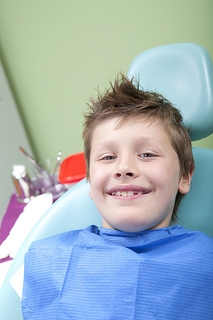
Many developing orthodontic problems can be intercepted and corrected if diagnosed and treated at an early age. Dr. Andrew Nalin and our team at Nalin Orthodontics recommend children have their first orthodontic evaluation no later than age seven, or younger if the front four permanent teeth have replaced the baby teeth. Early treatment, also known as interceptive treatment or Phase I treatment, provides both timely detection of problems and greater opportunity for more effective treatment. Early intervention guides growth and development, preventing serious problems later.
If your child is showing these signs, it may be time to think about early orthodontic treatment:
- Early or late loss of baby teeth (your child should typically start losing teeth around age five or six, and will have all their permanent teeth in around age 12 to 13)
- Difficulty chewing and/or biting
- Mouth breathing
- Sucking his or her thumb
- Speech impediment
- Protruding teeth (the top teeth and the bottom teeth extend away from each other)
- Crowded front teeth
- Teeth that don't come together in a normal manner or even at all
Early intervention will greatly reduce the severity of your child’s case, and therefore reduce the length of treatment time and cost for a second phase of treatment when all of his or her permanent teeth have erupted. An evaluation at our Mount Vernon, WA office will determine if your child’s dental and skeletal growth is proceeding properly or if interceptive treatment is needed. Many times, a more severe problem can be corrected using sophisticated removable appliances instead of traditional orthodontic treatment.
To schedule a consultation for your child to visit with Dr. Andrew Nalin, please give us a call! We will provide your child with an initial exam, and discuss with you the best steps to take toward caring for your child's smile.
November 3rd, 2021
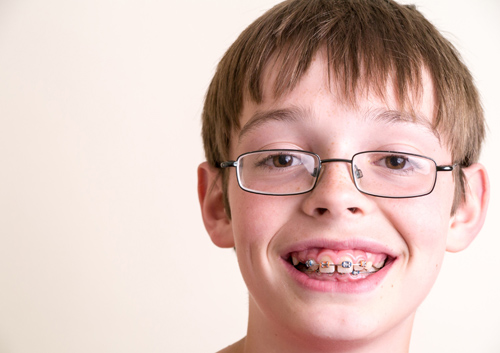
The average age of individuals who get braces is between nine and 14, although it is appropriate for younger children to visit Nalin Orthodontics for a consultation with Dr. Andrew Nalin. While parents may be concerned about the efficacy of early orthodontics, research suggests that early intervention can prevent greater dental health problems later in life.
What types of conditions require early intervention?
According to the American Association of Orthodontists, 3.7 million children under the age of 17 receive orthodontic treatment each year. Early intervention may be appropriate for younger children with crooked teeth, jaw misalignment, and other common issues. Early orthodontic treatment may be of use for several types of problems:
- Class I malocclusion. This condition is very common. It features crooked teeth or those that protrude at abnormal angles. In general, early treatment for Class I malocclusion occurs in two phases, each two years long.
- Class III malocclusion. Known as an underbite, in which the lower jaw is too big or the upper jaw too small, Class III malocclusion requires early intervention. Because treatment involves changing growth patterns, starting as early as age seven is a smart choice for this dental problem.
- Crossbite. Crossbite occurs when the upper and lower jaws are not properly aligned. An orthodontic device called a palatal expander widens the upper jaw, allowing teeth to align properly. Research suggests that early treatment may be beneficial in crossbite cases, especially when the jaw must shift laterally to correct the problem.
- Tooth extraction. That mouthful of crooked baby teeth can cause problems when your child’s permanent teeth erupt. For kids with especially full mouths, extracting baby teeth and even permanent premolars can help adult teeth grow in straight.
Considerations when thinking about early intervention
Early intervention isn’t helpful for all conditions. For example, research suggests that there is little benefit to early orthodontics for Class II malocclusion (commonly known as an overbite). Instead, your child should wait until adolescence to begin treatment. Scheduling a visit to our Mount Vernon, WA office when your child is around age seven is a smart way to create an individualized treatment plan that addresses unique orthodontic needs.

 Website Powered by Sesame 24-7™