Our Blog

How Your Pearly Whites Can Help You in Life

April 25th, 2023

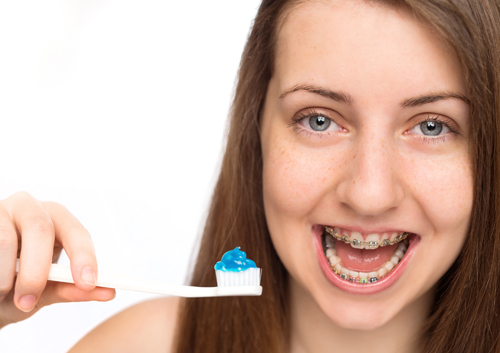
At Nalin Orthodontics, Dr. Andrew Nalin and our staff have found that patients who like their smiles have better self-esteem. People who don’t like their smiles are often skittish about talking to other people. According to the National Women’s Health Resource Center, when women are asked about what they’d most like to change about themselves, many point to their smile. Despite wanting to change their smiles, quite a few of the people who are unhappy about that part of themselves won’t consider getting braces.

Most Americans Don’t Have Straight Teeth

The American Association of Orthodontics estimates that 4.5 million Americans wear braces or other orthodontic equipment to straighten their teeth and to get a healthier mouth. One in five of those braces wearers are women. The organization’s statistics also show that about 75 percent of the population doesn’t have straight teeth, and those people would benefit from getting braces.

While the main benefit of braces is straight teeth, and to improve the look of your smile, there are other benefits that make braces even more useful, including:

  • Straighter teeth help people chew better.
  • Straighter teeth give people a proper bite.
  • People speak better when they have straighter teeth.
  • When people have straight teeth, they have better overall gum and mouth health. A healthier mouth means flossing and brushing are easier, and that means your entire mouth stays healthy.
  • A healthy mouth is also linked to a healthy body.

When you feel proud of those pearly whites, you feel better about your smile, and that contributes to a better self-image and improved self-esteem. Ultimately, that can lead to greater career success and a more fulfilling social life.

Positioned for Success

April 24th, 2023

As you near the end of your orthodontic treatment, you’re probably already imagining the day when your brackets and wires finally come off. Or the moment you’ve finished with your last set of aligners. That day might come just a bit sooner if Dr. Andrew Nalin and our team recommend a positioner.

While not as well-known as other orthodontic treatments, a positioner is an appliance that can shorten your time in traditional braces and aligners by weeks or even months. Curious? Read on!

  • What Exactly Is a Positioner?

A positioner resembles a clear mouthguard. Its arched shape is designed to fit snugly over your teeth. It’s sometimes called a finishing appliance, because it’s designed to make those last small adjustments to your alignment and bite. If you’re a good candidate for a positioner, it can replace your braces or aligners for your last several weeks or months of treatment.

  • How Are Positioners Made?

This appliance is custom fabricated to fit your very specific orthodontic needs. Commonly, a mold is made of your teeth. A model of your teeth is made from this mold. Precision instruments are used to move the model teeth into your ideal alignment.

Once this model of your future finished smile is complete, it is used to create the positioner. When the thermoplastic material is molded to the model, it creates an appliance with an indentation for each individual tooth in its desired final location.

Available in a variety of materials, a positioner is most often designed as a clear single piece, covering both your upper and lower teeth. This makes sure that your teeth are not only aligned properly, but that your upper and lower teeth are working together for a healthy bite. Openings in the positioner provide airways which allow you to breathe easily.

  • How Do Positioners Work?

Because your teeth haven’t settled firmly into place yet (this will happen as you wear your retainer), they’re still able to move. That’s why your positioner is shaped to fit your teeth in their future ideal placement, not where they are at present.

Positioners require your active participation. Your teeth move to the ideal spots molded into the positioner through “exercise”—biting down on your appliance for 15-20 seconds before relaxing your bite, usually every 10-15 minutes during your daily wear. The gentle force provided by your jaw muscles helps guide your teeth into position more quickly. Dr. Andrew Nalin will give you instructions on just how to—and how often to—do these exercises.

  • How Long Are They Worn?

Positioners are commonly worn at least four hours a day to start with and all night long, or Dr. Andrew Nalin might recommend 24 hour a day wear for the first week. As you progress, you’ll wear them for shorter periods during the day, gradually tapering off until your treatment is complete.

Depending on the amount of correction that’s still needed, positioner use ranges from several weeks to several months. One thing that will ensure that your time in a positioner is as short as it can be is your willingness to follow our instructions. The speed and effectiveness of your final tooth movements is largely up to you!

  • Caring for a Positioner

Gentle treatment is best. Clean your positioner before and after wearing it using a toothbrush and mild toothpaste. Never boil it or expose it to heat. We will give you instructions for how to clean it more thoroughly, if needed.

Like retainers, clear aligners, and mouthguards, a positioner needs to be protected when it’s not in your mouth. Your positioner will come with a case, so be sure to use it!

Positioners aren’t recommended for every orthodontic patient. But if you feel this might be an option worth pursuing, talk to us when you visit our Mount Vernon, WA office. A positioner could be an effective, time-saving step on your path to a lifetime of healthy smiles.

Shark Teeth

April 5th, 2023

It seems like sharks are everywhere these days—on land, sea, and air(waves). A halftime show meme gone viral. A week of summer TV devoted to our favorite apex predators. And who doesn’t have “Baby Shark” playing in their heads all day once they’ve heard it? But are we jumping the shark to discuss this topic in an orthodontic blog?

Not at all! Because today, we’re going to talk about shark teeth—just not the ones you might be expecting.

One of the expected sights when a shark opens its mouth are those rows and rows of shiny shark teeth. Sharks can grow from two to 15 rows of teeth at any one time (and some sharks have even more). This means sharp new teeth are always ready to replace any shark tooth which is lost, broken, or worn out.

An unexpected sight? When children point to their new adult tooth or teeth coming in—right behind their still-firmly rooted baby teeth! This double set of teeth is called “shark teeth,” and, while it certainly might come as a surprise, it’s not all that uncommon. But why do children develop shark teeth at all?

After all, baby, or primary, teeth have small roots, and are designed to come out easily when the adult teeth start arriving. When a permanent tooth starts to erupt, it pushes against the root of the baby tooth above it. This pressure gradually dissolves the root of the primary tooth, and with nothing to anchor it, it’s now loose, wiggly, and ready to fall out. That’s why baby teeth often look like they have no roots at all when they eventually wiggle free.

Sometimes, though, the roots of a primary tooth don’t break down, which means baby teeth stay right where they are. It also means that the permanent teeth have to erupt somewhere else—usually behind those stubborn little baby teeth.

Shark teeth can first appear around the ages of five to seven when the permanent front teeth start arriving, or several years later, when the adult molars begin to come in. Any extra teeth in one small jaw naturally raise concerns about tooth misalignment, especially when those extra teeth are molars. If double molars are causing crowding, it’s a good time for your child to have an orthodontic examination at our Mount Vernon, WA office to make sure the permanent teeth are properly positioned.

Unlike sharks, we don’t have an endless supply of replacement teeth, so it’s understandable to worry when you see anything unexpected. If you want to know more about shark teeth, or if you have any concerns, don’t hesitate to call Dr. Andrew Nalin for expert advice.

Interproximal Cavities: The Inside Story

March 29th, 2023

Time to brush! So, you make sure you gently brush the plaque off the outside surfaces of your teeth. You want to present a gleaming smile to the world, after all. And you make sure to brush the inside surfaces as well, because who wants to feel a fuzzy patch of plaque every time their tongue hits their teeth? And, naturally, you remember to clean the tops of your molars, because those crevices make them more cavity-prone than any other surface.

Done? Not quite!

You might be surprised to learn that no matter how well you’ve brushed all the visible surfaces of your teeth, you’ve left quite a bit of enamel untouched—the adjoining, or touching, surfaces of the teeth that sit next to each other.

You’ve probably noticed that your bristles can’t . . . quite . . . reach all the enamel between your teeth (especially between your molars!) when you’re brushing. This means that food particles and plaque have an easier time sticking around. And when the bacteria in plaque are left undisturbed, especially with a banquet of food particles available, they produce acids which gradually eat away at the enamel covering our teeth, creating a cavity.

Here’s where we work in some specific dental vocabulary. “Interproximal” means between the adjoining, or touching, surfaces of the teeth. And an interproximal cavity is a cavity that develops on one of those side surfaces of your teeth.

  • Preventing Interproximal Cavities

Fortunately, prevention is about as basic as it can be—brushing and flossing effectively. Dentists recommend brushing for two minutes at least twice a day and flossing once each day. While most of us are good about keeping up with brushing, sometimes that daily flossing is more a goal than a reality.

But it’s flossing which really does the trick when it comes to interproximal cleaning. If you floss correctly, food particles and plaque are removed from between the teeth and around the gum line—places where bristles just can’t reach.

When you wear braces, though, flossing isn’t quite so basic. Getting that floss just where it needs to be in between brackets and wires and in between teeth can be a challenge!

The good news is there are many products designed just to make flossing easier while you’re in orthodontic treatment:

  • Floss threaders are flexible hoops that help you thread floss behind your wires easily.
  • Precut floss strands use a stiff tip at one end for threading floss through wires.
  • Interproximal brushes are tiny, cone-shaped brushes which can fit between your teeth and braces for precise cleaning.
  • Water flossers eliminate floss altogether, using a pulsing stream of water to clean between and around teeth and braces.

During your next visit to our Mount Vernon, WA office, Dr. Andrew Nalin can give you tips on how to use any of these tools effectively for cleaner teeth and cleaner braces.

Preventing cavities on the exterior surfaces of your teeth is probably pretty much automatic by now, but don’t forget the potential for stealth decay! If we find signs of erosion on the sides of your teeth, or if your hygienist lets you know that you’ve got a lot of interproximal plaque buildup, work with your dental team to make sure “interproximal cavity” doesn’t become a working part of your dental vocabulary.