December 30th, 2013

When beginning orthodontic treatment, most patients ask Dr. Andrew Nalin and our team a lot of questions about what to expect, while others choose to just "go with the flow" and leave it to us to build for them a beautiful smile. And for our team at Nalin Orthodontics, that's understandable.
But for those who do ask questions, two of the ones we frequently hear are "Will my braces hurt?" and "How long will these be on?"
We explain to our patients that despite what they've heard, braces do not hurt when they're initially put on. Yes, you will experience soreness after your braces are placed and when your teeth start to move. Too often, our patients hear horror stories about how much it hurts to get the braces on, so they tend to over-worry. The truth is, after their braces are on, almost all patients say "that's it?" because it's actually easy and painless!
At Nalin Orthodontics, we answer most of your other questions during your initial exam. When a patient visits our office for the first time, we give him or her a time estimate of how long it will take to achieve their ideal smile. All other questions are answered at the bonding appointment when the braces are placed. We cover all the topics, everything from eating to brushing with braces, but we also know that after your initial appointment, it's natural for you to have questions about your or your child's treatment. And we are always here for you; we are thorough and always try to answer any questions or concerns you may have. As a patient, that's one thing you never have to worry about. You will always know what's going on throughout your orthodontic experience.
December 19th, 2013
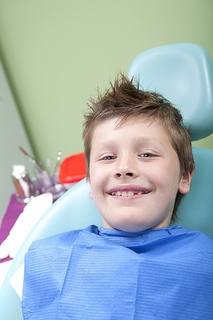
Many developing orthodontic problems can be intercepted and corrected if diagnosed and treated at an early age. Dr. Andrew Nalin and our team at Nalin Orthodontics recommend children have their first orthodontic evaluation no later than age seven, or younger if the front four permanent teeth have replaced the baby teeth. Early treatment, also known as interceptive treatment or Phase I treatment, provides both timely detection of problems and greater opportunity for more effective treatment. Early intervention guides growth and development, preventing serious problems later.
If your child is showing these signs, it may be time to think about early orthodontic treatment:
- Early or late loss of baby teeth (your child should typically start losing teeth around age five or six, and will have all their permanent teeth in around age 12 to 13)
- Difficulty chewing and/or biting
- Mouth breathing
- Sucking his or her thumb
- Speech impediment
- Protruding teeth (the top teeth and the bottom teeth extend away from each other)
- Crowded front teeth
- Teeth that don't come together in a normal manner or even at all
Early intervention will greatly reduce the severity of your child’s case, and therefore reduce the length of treatment time and cost for a second phase of treatment when all of his or her permanent teeth have erupted. An evaluation at our Mount Vernon, WA office will determine if your child’s dental and skeletal growth is proceeding properly or if interceptive treatment is needed. Many times, a more severe problem can be corrected using sophisticated removable appliances instead of traditional orthodontic treatment.
To schedule a consultation for your child to visit with Dr. Andrew Nalin, please give us a call! We will provide your child with an initial exam, and discuss with you the best steps to take toward caring for your child's smile.
December 11th, 2013
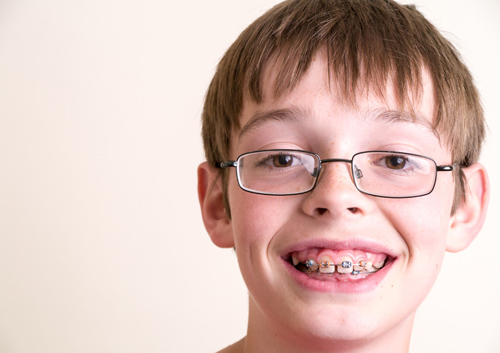
The average age of individuals who get braces is between nine and 14, although it is appropriate for younger children to visit Nalin Orthodontics for a consultation with Dr. Andrew Nalin. While parents may be concerned about the efficacy of early orthodontics, research suggests that early intervention can prevent greater dental health problems later in life.
What types of conditions require early intervention?
According to the American Association of Orthodontists, 3.7 million children under the age of 17 receive orthodontic treatment each year. Early intervention may be appropriate for younger children with crooked teeth, jaw misalignment, and other common issues. Early orthodontic treatment may be of use for several types of problems:
- Class I malocclusion. This condition is very common. It features crooked teeth or those that protrude at abnormal angles. In general, early treatment for Class I malocclusion occurs in two phases, each two years long.
- Class III malocclusion. Known as an underbite, in which the lower jaw is too big or the upper jaw too small, Class III malocclusion requires early intervention. Because treatment involves changing growth patterns, starting as early as age seven is a smart choice for this dental problem.
- Crossbite. Crossbite occurs when the upper and lower jaws are not properly aligned. An orthodontic device called a palatal expander widens the upper jaw, allowing teeth to align properly. Research suggests that early treatment may be beneficial in crossbite cases, especially when the jaw must shift laterally to correct the problem.
- Tooth extraction. That mouthful of crooked baby teeth can cause problems when your child’s permanent teeth erupt. For kids with especially full mouths, extracting baby teeth and even permanent premolars can help adult teeth grow in straight.
Considerations when thinking about early intervention
Early intervention isn’t helpful for all conditions. For example, research suggests that there is little benefit to early orthodontics for Class II malocclusion (commonly known as an overbite). Instead, your child should wait until adolescence to begin treatment. Scheduling a visit to our Mount Vernon, WA office when your child is around age seven is a smart way to create an individualized treatment plan that addresses unique orthodontic needs.
December 4th, 2013

As more people turn to bottled water and away from the tap, they may be missing out on one important ingredient that most brands of bottled water fail to include: fluoride! Because fluoride helps strengthen teeth, it is an important component of maintaining good oral health. Our friends at the American Dental Association have endorsed both community water fluoridation and the use of fluoride-containing products as a safe means of preventing tooth decay.
In fact, the Centers for Disease Control and Prevention has also warned that “bottled water may not have a sufficient amount of fluoride, which is important for preventing tooth decay and promoting oral health.” If you are avoiding fluoridated tap water in favor of ever-more-popular bottled water, you could be missing out on the levels of fluoride necessary to make a difference in your oral health. One 2012 study in the Journal of Pediatric Dentistry found that more than 65 percent of parents using bottled water did not know what levels of fluoride it contained.
If bottled water happens to be your or your children’s beverage of choice, check the label to make sure your brand contains fluoride. Of course, simply drinking fluoridated water is not a magic ticket to perfect teeth. To keep your pearly whites in tip-top shape, it’s important to brush and floss daily and avoid sugary sweets, in addition to maintaining your fluoride intake.
Questions about fluoride? Give us a call at our convenient Mount Vernon, WA office! We look forward to hearing from you!

 Website Powered by Sesame 24-7™