August 20th, 2014

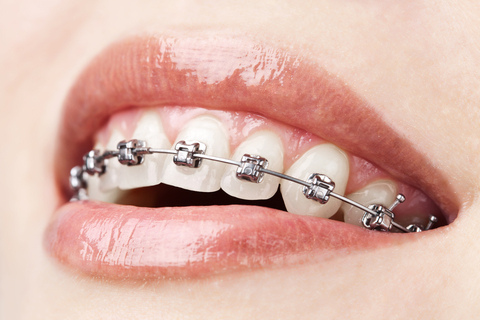
The purpose of braces and other forms of orthodontic treatment at Nalin Orthodontics is to correct malocclusion, also known as crooked or crowded teeth, or “bad bites.” Past orthodontic practice dictated that wisdom teeth be removed, especially in cases of crowding.
The wisdom teeth are the last teeth to come in, and are officially known as the third molars. The teeth typically erupt, or break the surface of the skin, in young people between the ages of 13 and 20.
Sometimes, wisdom teeth are impacted. That means they cannot break through the gum tissue. This typically happens when the mouth or jaw is too small to accommodate the teeth. Impacted wisdom teeth can become infected, and some dentists and orthodontists may want to remove them as prophylaxis to prevent possible future infection.
Justification for removing wisdom teeth
Dr. Andrew Nalin will tell you that in some cases, wisdom teeth attempt to come in the wrong way, either tilting in the jaw, or sideways. If the mouth is too small to accommodate these additional teeth, they inevitably become impacted. Swelling or infection of the gum flap above an impacted wisdom tooth may cause pain. The greatest danger is pericoronitis, a potentially dangerous infection that can occur in the gum area around an impacted wisdom tooth, or around a wisdom tooth that has erupted.
Orthodontists base their decision to remove wisdom teeth on each patient's individual circumstances. To learn more about the impact wisdom teeth have on orthodontic treatment, or to schedule a visit with Dr. Andrew Nalin, please give us a call at our convenient Mount Vernon, WA office!
August 13th, 2014

It’s no easy feat to have one of the best smiles in Hollywood. The reality TV starlet Kristin Cavallari attributes her gorgeous smile to routine oral hygiene, the removal of two impacted wisdom teeth, and having undergone orthodontic treatment. Kristin’s treatment began in sixth grade when she was fitted with a device Dr. Andrew Nalin and our team call a palatal expander, which is used to guide upper jaw growth in our younger patients.
What is a palatal expander?
A palatal expander “expands” (or widens) your upper jaw by applying gentle pressure on your upper molars, and is used to make the bottom and upper teeth fit together better. In addition, palatal expanders work to create more room for teeth, as well as promote a broader, more appealing smile.
Do palatal expanders hurt?
Palatal expanders are usually not painful, however you may experience difficulty speaking and swallowing for the first few days. Adjusting your palatal expander as instructed by Dr. Andrew Nalin will ensure there are no delays in regards to your treatment plan.
Typically, it takes a few weeks to achieve the desired amount of expansion, after which you will keep wearing your expander for about six months, giving time for the new bone to form and stabilize. Dr. Andrew Nalin and our team at Nalin Orthodontics will give you detailed instructions about how to adjust your appliance and can answer any questions you may have about your palatal expander.
If you have any questions about your palatal expander or your treatment plan with Dr. Andrew Nalin, please give us a call at our Mount Vernon, WA office!
August 6th, 2014
As you are undergoing orthodontic treatment, our team at Nalin Orthodontics would like to point you to a helpful website. Our friends at the American Association of Orthodontists (AAO) have lots of important information about everything relating to braces, including myths and facts of orthodontics, tips for a better orthodontic experience, and cool webisodes about orthodontics.
Check out AAO today and feel free to contact us at our Mount Vernon, WA office if you have any questions.
Dr. Andrew Nalin and our team at Nalin Orthodontics hope this information helps you!
July 30th, 2014

While everyone understands that a dentist takes care of teeth, not everyone is aware of what an orthodontist does. This confusion sometimes leads to misunderstandings about what Nalin Orthodontics does for our patients and how exactly Dr. Andrew Nalin can help them. Let’s take a closer look at a couple of the myths and misconceptions about orthodontists.
Perhaps the biggest misconception about the orthodontist is that they’re just like your family dentist. The truth is, they’re actually very different. While it’s true that both orthodontists and dentists care about helping you enjoy a lifetime of good dental and oral health, orthodontists go about achieving this goal in different ways. For instance, if you need to have a cavity filled, you probably won’t make an appointment to see an orthodontist. Dentists are the health professionals to see if you’re concerned about a cavity or need a filling. A dentist can also treat gum disease, tooth decay, toothaches, and other common oral health problems.
People see an orthodontist for very particular services. Most of the patients we see on a daily basis are here because they have braces, or they need to be fitted with braces or another form of tooth-straightening device. In other words, they consult an orthodontist when they are concerned about the alignment of their teeth. As a child grows up, his or her teeth may come in crooked. This can happen for a number of reasons, so it’s important for an orthodontist to take a look at a child’s teeth at about seven years of age. At that age, it’s possible to detect any problems that have not become too advanced to treat easily. Your family dentist may also refer your child to an orthodontist once the adult teeth have fully grown in.
Another common misconception about orthodontists is that they only treat children. It’s true that when you visit an orthodontic clinic you’re apt to see a lot of young kids, but you’ll also see teenagers, college students, and adults. Because crooked teeth can be caused by a number of different factors, it’s entirely possible for someone to require orthodontic treatment at any age.
If you want to know more about the practice of orthodontics or what your orthodontist can do for you, then simply ask Dr. Andrew Nalin. It’s best to get answers to your specific questions directly from the person who will be treating you. While you’re sure to find Internet resources helpful, there really is no substitute for the personal attention you’ll get during your appointment at our Mount Vernon, WA office.

 Website Powered by Sesame 24-7™