Our Blog

When should I floss during the day?

June 14th, 2017

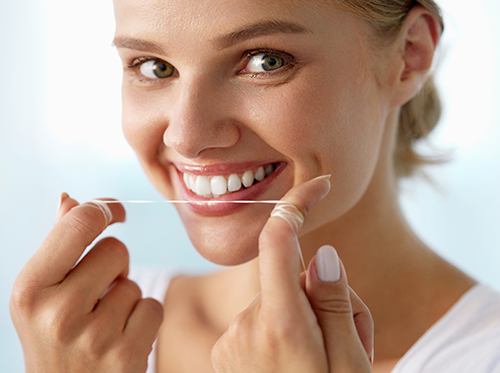
A vital step in your oral health routine is flossing. We hope our patients at Nalin Orthodontics maintain good oral hygiene, including daily flossing between each visit to our Mount Vernon, WA office. A toothbrush is not always enough to get to the hard-to-reach areas of your mouth. When food remains between your teeth, bacteria starts to grow and will break down your enamel. This is where flossing comes in!

Should you floss before or after brushing?

Whatever your personal preference, you may floss before or after you brush your teeth. When you floss first, you can brush away any leftover dislodged food debris from your teeth. On the other hand, when you brush first, you will loosen the plaque between your teeth, which makes flossing more effective.

The essential aspect is that you floss thoroughly by using a fresh strand of floss and make sure to get between every tooth. Even if your teeth look and feel clean, don’t skip flossing or plaque will begin to build up on your teeth.

When is the best time to floss?

Although you should brush your teeth at least twice a day, Dr. Andrew Nalin and our team recommend flossing your teeth thoroughly once a day. Many people prefer to floss before bed, so that plaque doesn’t sit between their teeth all night.

What kind of floss should I use?

You may choose between interdental cleaning picks or flexible floss strands to perform your daily flossing routine. If you have permanent oral appliances or restorations, be sure to follow the flossing instructions provided to you.

Do you need help flossing?

If you’re having trouble flossing or have questions about which floss is best for your teeth, contact our Mount Vernon, WA office and we can provide you with support. Be sure to keep up with your daily flossing routine, and we will see you at your next appointment!


Importance of Oral Hygiene with Braces

June 7th, 2017

15.00

Normal
0

false
false
false

EN-US
JA
X-NONE

/* Style Definitions */
table.MsoNormalTable
{mso-style-name:"Table Normal";
mso-tstyle-rowband-size:0;
mso-tstyle-colband-size:0;
mso-style-noshow:yes;
mso-style-priority:99;
mso-style-parent:"";
mso-padding-alt:0in 5.4pt 0in 5.4pt;
mso-para-margin:0in;
mso-para-margin-bottom:.0001pt;
mso-pagination:widow-orphan;
font-size:12.0pt;
font-family:"Cambria",serif;
mso-ascii-font-family:Cambria;
mso-ascii-theme-font:minor-latin;
mso-hansi-font-family:Cambria;
mso-hansi-theme-font:minor-latin;}

Proper oral hygiene techniques are always worthwhile, but they are especially crucial when you’re wearing orthodontic appliances such as braces. When you don’t maintain an effective oral hygiene routine, you can be more susceptible to gum disease as well as tooth decay, cavities, decalcification, discoloration, and/or staining of the teeth.

Braces themselves don’t cause these issues, but since they create spaces that are difficult to clean, they provide extra sources of food (dental plaque and food debris) for the bacteria that do. Bacteria create a biofilm on the surface of a tooth that can spread if not addressed. That bacteria food can only be removed by a mechanical action: brushing and flossing your teeth!

Here’s a list of smart hygiene steps to follow for the duration of your braces treatment:

Proper tooth brushing technique: Make sure to brush your teeth thoroughly (for a total of about two minutes), but not too hard. Point the head of the toothbrush at the gum line and brush just hard enough so that you feel slight pressure against the gums. Use a soft, small-headed toothbrush or an electric toothbrush if you’d like. Try your best always to clean on and around every tooth, bracket, and wire in your mouth!

Flossing: Braces can make flossing a chore, but it’s an essential adjunct to proper tooth brushing. Make sure to floss between all your teeth and brackets. Dr. Andrew Nalin can provide you with braces floss threaders and interproximal toothbrushes (small brushes used to clean areas under wires and between brackets) to make the task easier. You might also consider purchasing an oral irrigator that uses a stream of water to blast food particles and debris from between teeth and gums.

Rinse with water: This may sound slight, but it’s a good idea, especially if you aren’t able to brush. Rinsing your mouth with water throughout the day helps to dislodge the decay-causing food particles that become lodged in braces.

Hygiene away from home: It’s a good idea to have a kit with a toothbrush, floss, floss threaders, mirror, and small water cup on hand at school or work. That way, you’ll be sure to have all the tools you need to keep your mouth clean.

Regular professional cleanings: As always, it’s best to visit your dentist regularly to verify everything in your mouth is in order and your oral hygiene routine is effective. Twice a year is sufficient, unless the dentist recommends more frequent visits.

It's vital to keep your teeth and gums clean during your braces treatment, and that requires your care and attention. If feel like you need help with any of the techniques above, a member of our Mount Vernon, WA team can demonstrate them for you!

Treatment Options for TMD

May 31st, 2017

Temporomandibular dysfunction (TMD) refers to a diverse range of disorders that relate to muscular function in the jaw and face — the temporomandibular joint (TMJ). That could mean difficulty opening your mouth, pain in the jaw or face, or any sort of problem with the jaw joint.

TMD can be difficult to diagnose because of the varied causes. Whatever the case, an accurate diagnosis from Dr. Andrew Nalin helps make treatment as successful as possible.

Most often, jaw problems will resolve themselves within several weeks or months. Surgeries like arthrocentesis, arthroscopy, and open-joint surgery should be a last resort. More conservative and reversible treatments should come first and are in fact the most critical step in the treatment of TMD.

Less invasive treatments like acupuncture and splints can be helpful, but that will depend on your particular case. It’s worth your while to speak with Dr. Andrew Nalin at our Mount Vernon, WA office to learn about solutions that could work for you.

A combination of treatments will most often produce the greatest relief for TMJ patients. It’s a good idea to avoid activities that overuse the jaws, such as chewing gum or clenching your jaws.

You can be proactive in finding relief for TMD by trying the following remedies at home:

  • Eat soft food: When you eat soft and/or blended food, your jaw gets an opportunity to rest. Avoid chewy and crunchy food, and food that requires you to open your mouth wide, like apples or corn on the cob.
  • Apply moist heat: A hot water bottle wrapped in a moist towel can help reduce symptoms.
  • Apply ice: Applying an ice pack wrapped in a cloth or towel for no longer than 15 minutes may also reduce pain and promote healing.
  • Do jaw exercises: A physical therapist can help identify the exercises that will work for you. Jaw exercises have been shown to be an effective treatment method that can be performed at home.
  • Relaxation: Actively try to relax the muscles of the face and lips, and let your teeth come apart. Many find meditation, yoga, and slow, deep breathing to be helpful for reducing stress and tension.
  • Avoid wide yawns: Keep your fist under your jaw when you feel a yawn coming on, to keep your jaw from opening too widely.

Memorial Day

May 24th, 2017

Memorial Day is not only a federal holiday in the United States, but it is a day of observance and remembrance of those who died in service. Originally known as Decoration Day, this solemn day has been marked on calendars since the end of the American Civil War as a day to commemorate both the Confederate and Union soldiers who fought and died in the war.

Marking the graves of fallen soldiers with flowers, wreaths, or other tokens has been practiced throughout history, but it wasn't until the mark of the end of the Civil War that a special day was decided upon as the one to spend in remembrance. By 1890, every state in the country was observing Decoration Day. It wasn't until 1967 when the name formally changed from Decoration Day to Memorial Day, in order to encompass all fallen American soldiers in all wars and conflicts. In June of 1968, Congress moved the official date of Memorial Day to the last Monday in May in order to create a three day weekend.

Today, while there is certainly an air of remembrance on Memorial Day, it has become more a day of spending time with family, friends, and other loved ones. This day is also heralded as the start of summer, with many schools finishing for the year around this time. Our team at Nalin Orthodontics remembers it as a day to take solace and remembered those lost.

Traditional observances of Memorial Day are still held, and they often involve raising the American Flag then lowering it to a half-staff position until noon, and then raising it once again to its full height afterwards. The flag is lowered to remember those who've lost their lives while in service to their country, and then it is raised to signify our willingness to not let their sacrifice be in vain.

From community parades in the Mount Vernon, WA area, backyard cook-outs, and fireworks to formal ceremonies, Memorial Day is commemorated in many different ways. No matter how you choose to spend this day, take a moment to remember those who've lost their lives in an effort to preserve our freedom.